
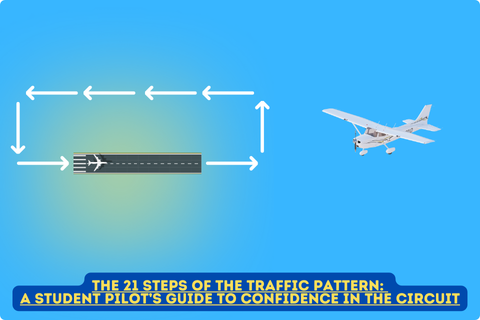
If you stick with flying long enough, you’ll eventually realize something funny: the traffic pattern — this simple rectangular loop in the sky — becomes your teacher. You arrive thinking you’re the one flying laps, but the pattern is quietly shaping you into a real pilot. Every turn, every configuration change, every checklist you complete sharpens your awareness and grows your confidence.
Today, you’ll walk through all 21 steps of the traffic pattern, from the moment you walk up to the airplane to the moment you shut it down. You’ll learn not only what to do, but why each step matters, how it prepares you for solo, and how it ultimately turns you into a safer, more capable aviator.
Let’s begin where all good flights begin: on the ground, with intention.
1. Exterior Preflight
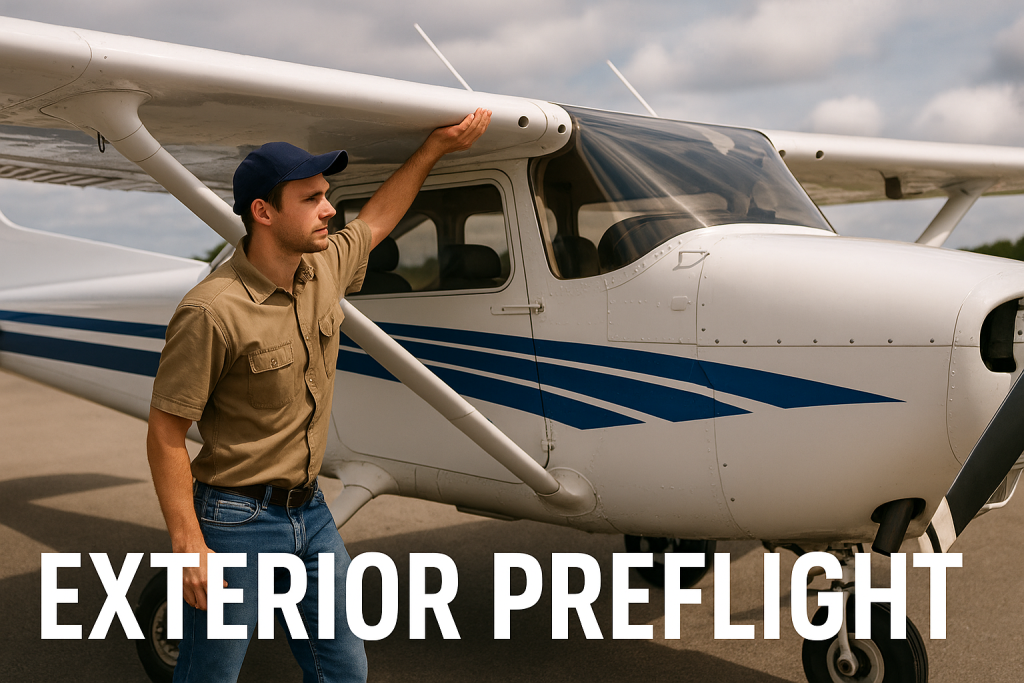
Your flight begins long before the engine ever starts. When you walk up to the airplane, you’re not just inspecting a machine — you’re forming a partnership with it. The exterior preflight teaches you to be a guardian of that partnership. You check the fuel caps for security, verify quantity, drain the sumps to ensure fuel purity, inspect the flight controls, walk the tail, and study each surface for cracks or loose rivets. This step is slow by design. It forces you to deliberately consider the aircraft as a system whose wellbeing you are responsible for. When you move your hands over the leading edge, tug the control surfaces, and look for abnormalities, you’re waking up your aviator instincts. A solid exterior preflight is how you learn to trust the airplane — and how it learns to trust you.
2. Interior Preflight
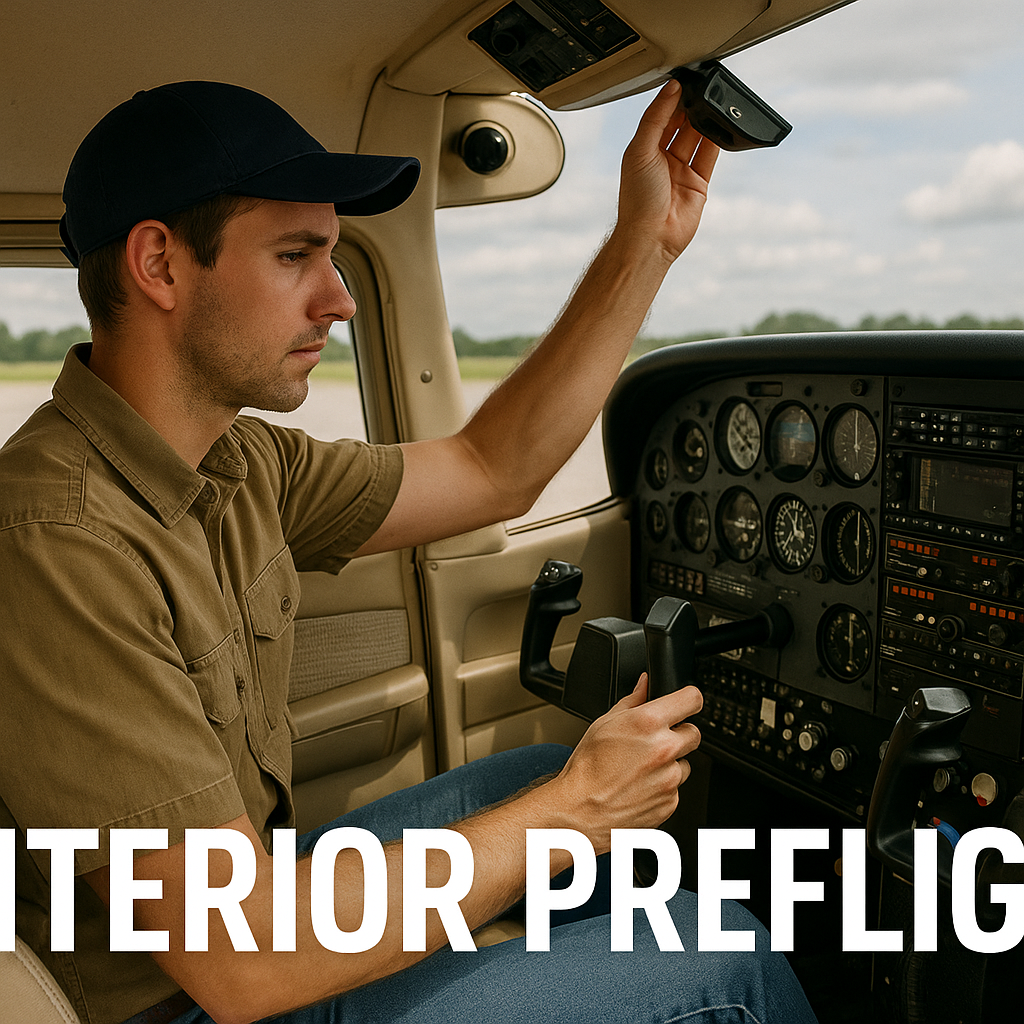
Once you settle into the cockpit, you’re stepping into a mindset just as much as a seat. The interior preflight is where your situational awareness begins. You check the documents — ARROW — because legality is the skeleton of safety. You ensure the control lock is removed, the fuel selector is on the desired tank, the circuit breakers are in, the avionics are off, and the trim is set. You look around the cabin wondering: If I had to fly right this very second, would everything be ready? The interior preflight is all about eliminating surprises. When you slide your hands over the throttle, mixture, flaps, and switches, you’re rehearsing the flight before it happens, turning the cockpit from a collection of knobs into a familiar workspace.
3. Before Startup Checklist
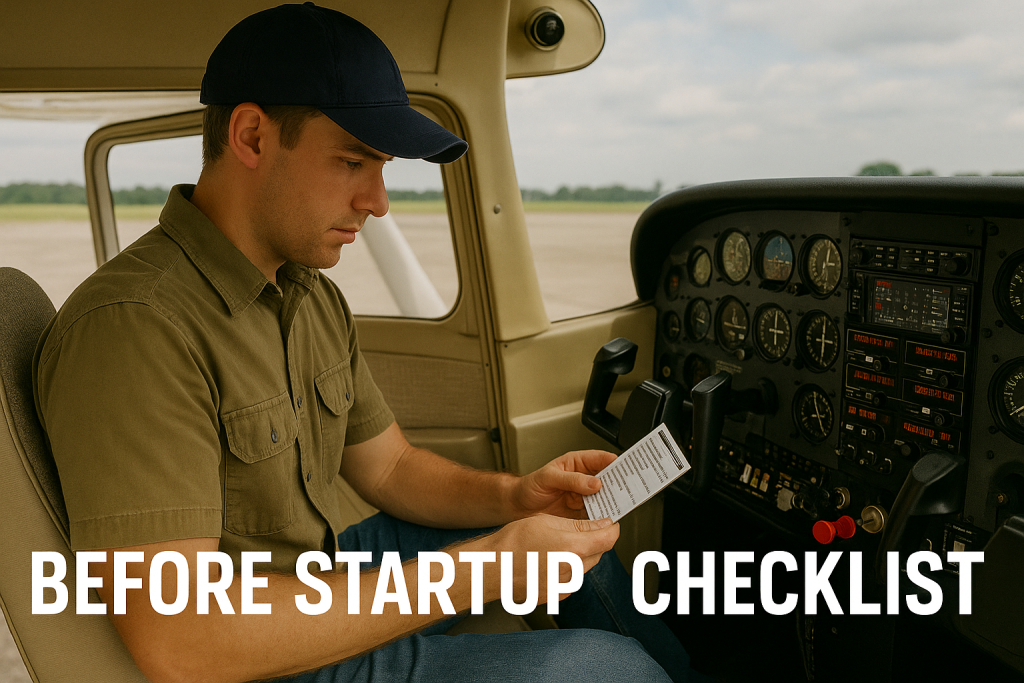
Before you bring the airplane to life, you take a moment to prepare for what that life will require of you. The before-startup checklist is simple, but it reinforces discipline: seatbelts secured, brakes tested and set, fuel levels confirmed, circuit breakers double-checked, and the surrounding area visually cleared. By following the checklist line-by-line, you are programming your brain to avoid the dangerous lure of assumption. A pilot who rushes this step risks discovering a problem after the engine is running — when the workload is higher, the stress is higher, and the margin for error is thinner. You are learning the habit of calm efficiency, one page at a time.
4. Startup
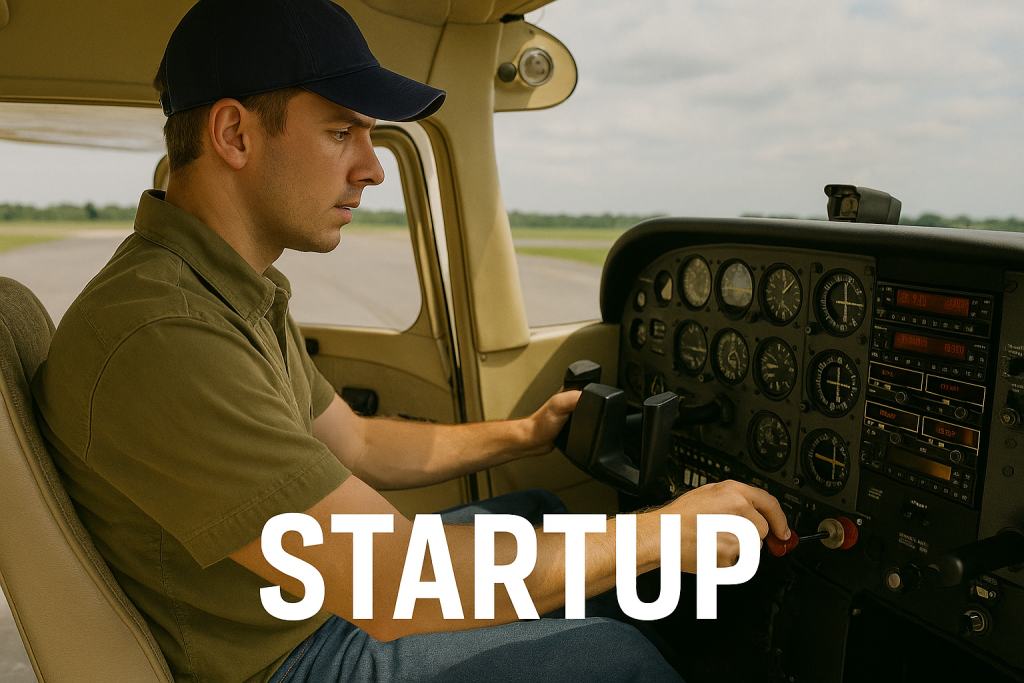
This is the moment where your airplane goes from quiet metal to something alive and responsive. When you start the engine, you listen for the familiar rhythm you’ll eventually be able to detect instantly — a smooth hum, the right RPM, stable oil pressure rising into the green. This is where you learn to feel the airplane. The cockpit vibrates, the prop spins, the gauges wake up. You’re now managing a machine that demands attention, and that attention becomes second nature over time. Starting the engine reminds you that flying is both art and engineering. You’re the human in the loop, bringing everything together.
5. Taxiing From the Ramp to the Run-Up Area
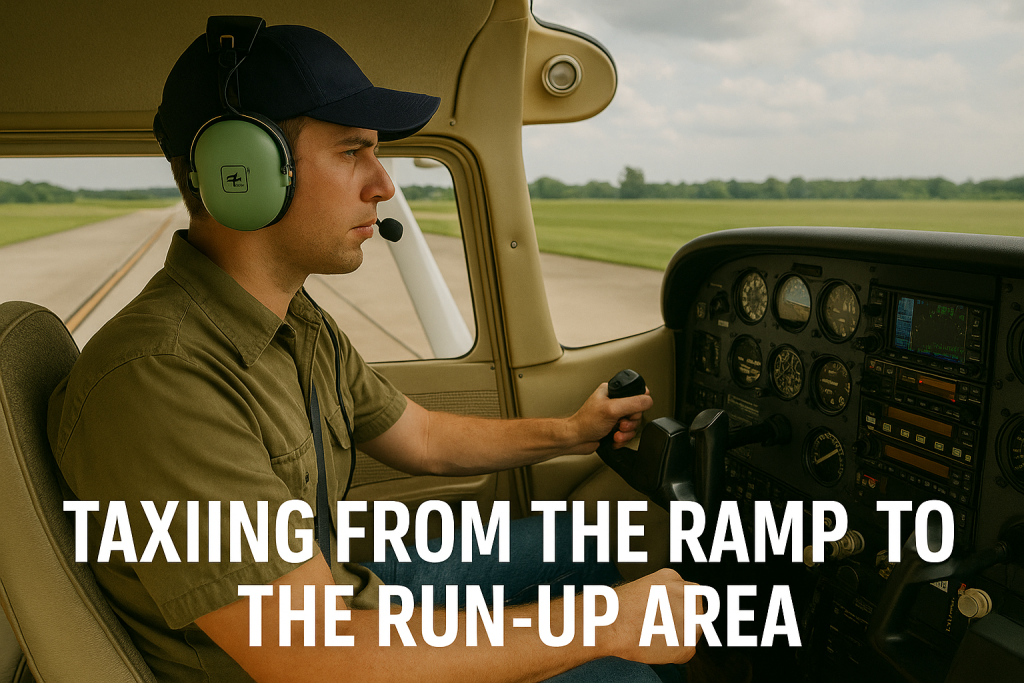
Taxiing is underrated — every pilot who thinks it’s trivial eventually learns why it isn’t. This is where you learn to handle the airplane at its most delicate. You add just enough throttle not to surge, ride the brakes lightly, steer with your feet (still weird at first), and maintain awareness of your surroundings. You monitor wind direction and position the controls properly: yoke into the wind, elevator neutral or back depending on conditions. You’re navigating a moving object in a crowd of other moving objects, and that makes you a safer pilot. As you taxi toward the run-up area, you’re mentally transitioning into the next phase of the flight, reviewing ATIS, thinking through your departure, and building a picture of the pattern’s shape in your mind.
6. Conducting the Run-Up Test
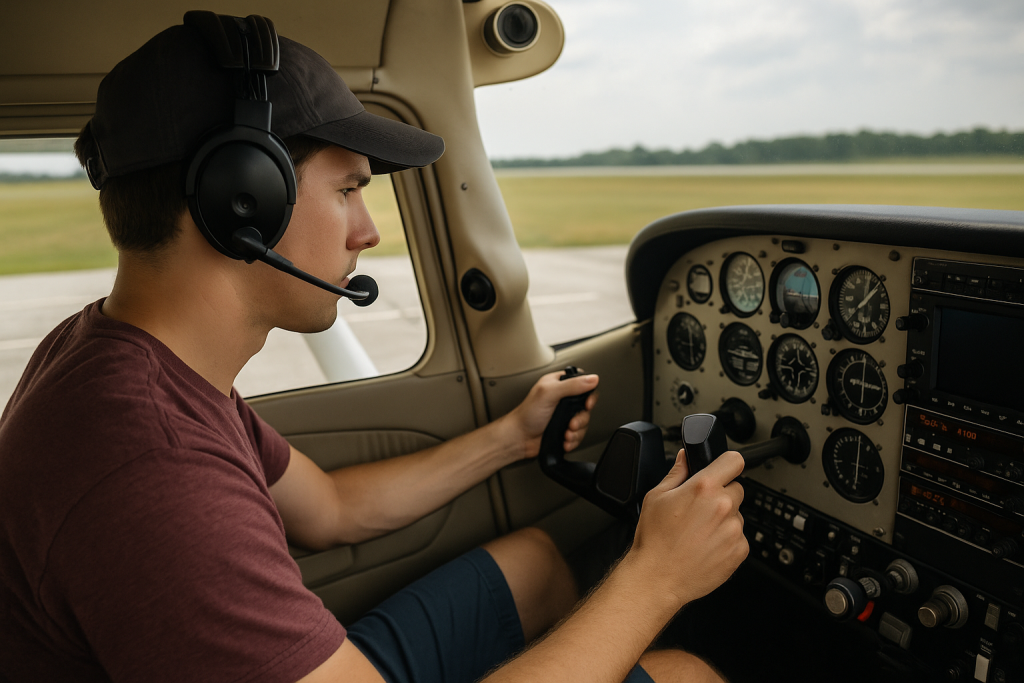
The run-up is where you have the last quiet moment to ask: Is the airplane ready to fly? Here you check the magnetos, carb heat or alternate air, engine instruments, idle RPM, vacuum pressure, and annunciators. You cycle the prop if you’re in a complex airplane. Most importantly, you confirm that your engine will produce the power you need in the takeoff roll. A rough mag drop or a stubborn gauge reading isn’t just a mechanical note — it’s a decision point. Student pilots often think the purpose of the run-up is to satisfy a checklist. In reality, it’s there to give you confidence. When the engine behaves exactly as expected during this test, you lift off with certainty instead of hesitation.
7. Taxiing Into Position and Hold
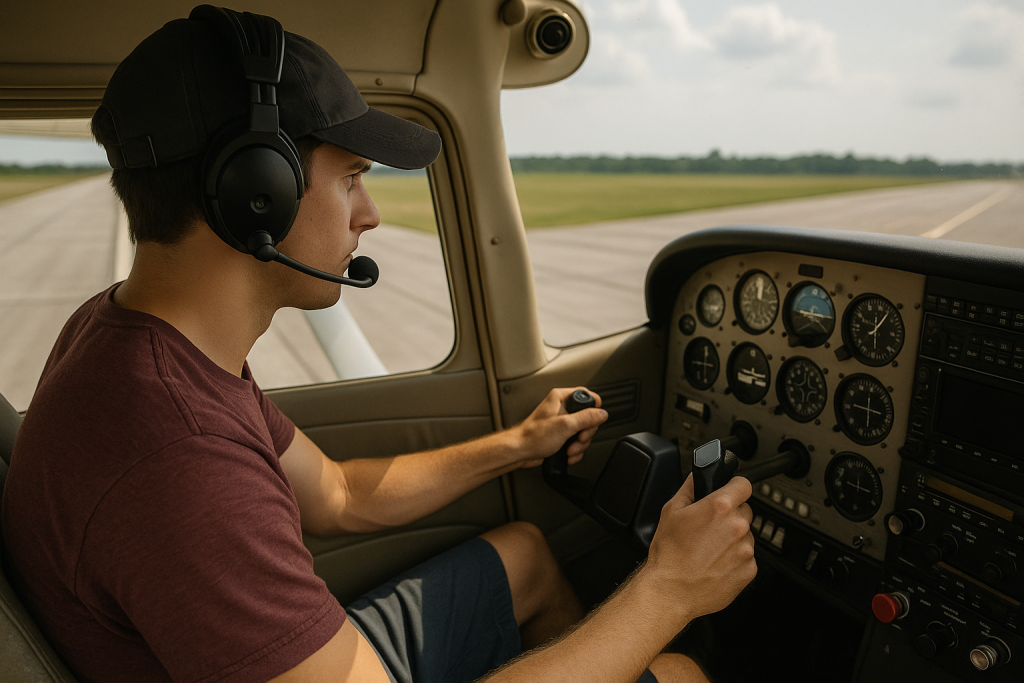
When ATC or common traffic advisories permit, you taxi into position and hold (or line up and wait). This is the moment the runway becomes yours. You align the nose precisely with the centerline, double-check your heading indicator, verify the windsock, ensure your flaps are set, and finalize your mental picture of the takeoff ahead. Everything else — the distractions, the clutter in your head, the lingering doubts — disappears. Being on the runway is a focusing force. Even as a student pilot, you’ll feel that shift: you’re no longer preparing to fly. You’re about to fly.
8. Getting Ready for Takeoff
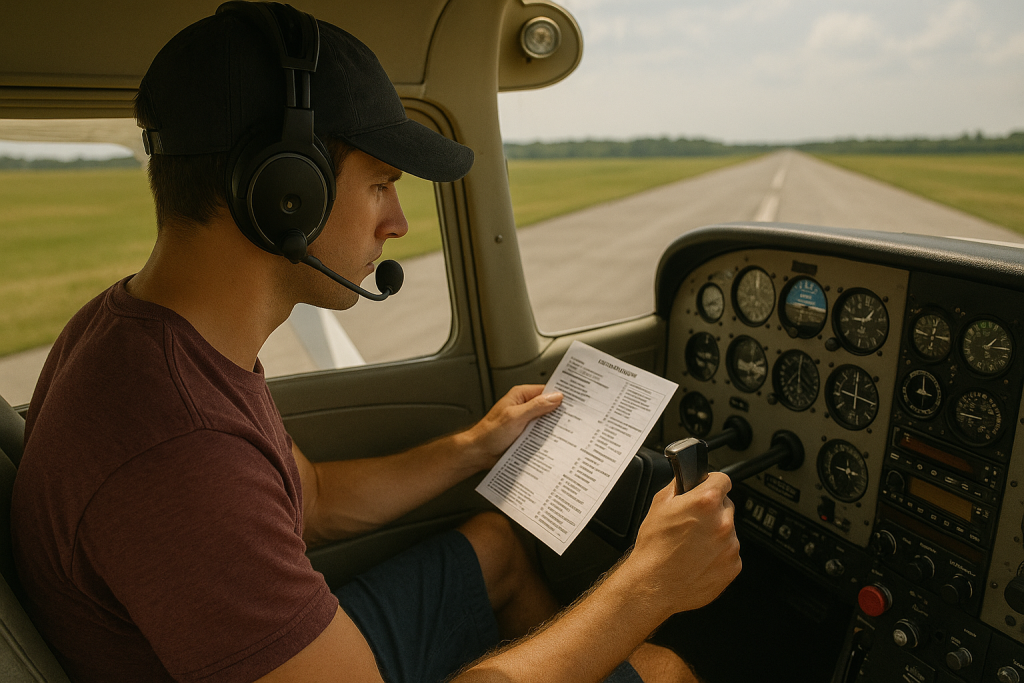
This quick-but-critical step is the last pause before committing to high-speed ground movement. You check your mixture is rich, fuel pump on if required, transponder set to ALT, lights on, doors and windows secured, and the DG aligned with the runway heading. You apply a firm hold on the yoke and remind yourself of the takeoff abort plan: What will you do if something suddenly sounds or feels wrong? This moment teaches discipline. Pilots who build this habit early carry it into every phase of their training — and every solo flight — with confidence.
9. The Takeoff Roll
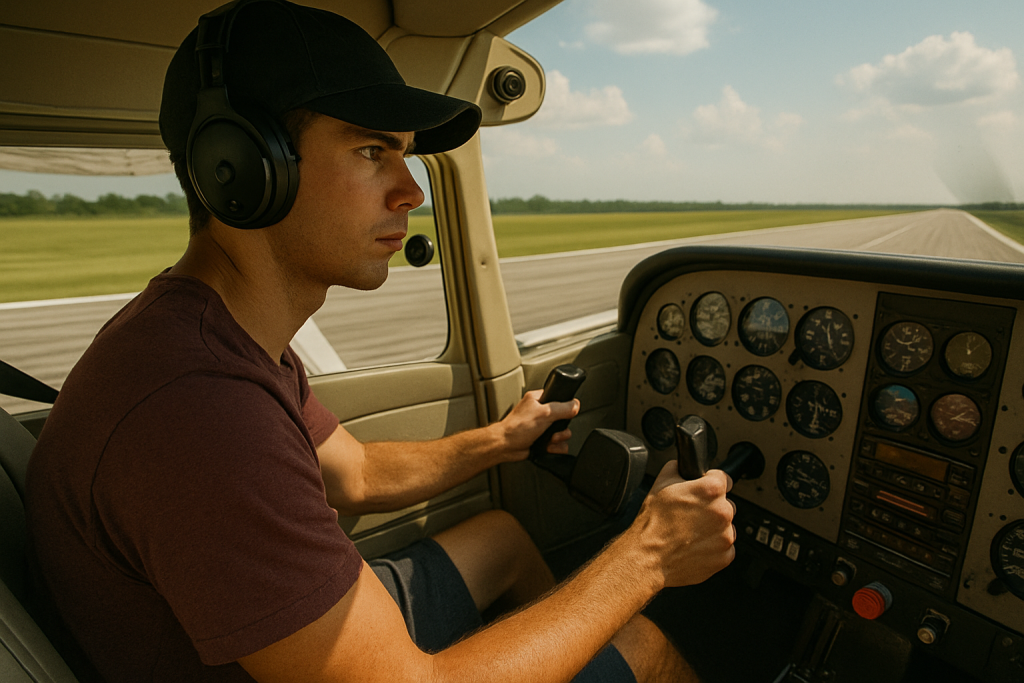
Push the throttle smoothly to full power, verify the engine instruments remain in the green, and keep the airplane centered with dynamic right rudder. This is where many students realize they’re no longer “learning about flying” — they are flying. The world accelerates, the runway markings blur, and you’re balancing directional stability, airspeed awareness, and pitch targets all at once. When you reach rotation speed, a gentle pull invites the aircraft into the sky. The takeoff roll is an initiation ritual in aviation. It transforms you into a pilot with each takeoff you perform.
10. Flying Upwind
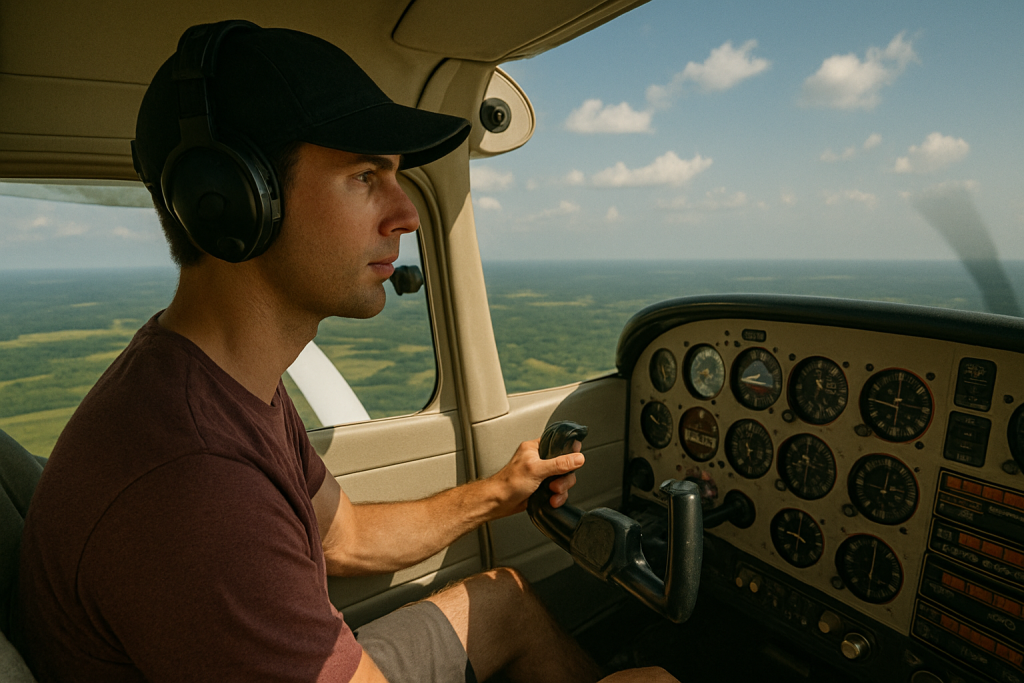
The upwind leg is your runway heading climbout. This is where you track runway alignment, maintain Vy or your school’s recommended climb speed, and monitor for traffic that may still be taking off or going around. Even though it feels simple — point straight and climb — it’s actually your first chance to practice precision flight. You maintain centerline extension, trim for hands-off stability, and stay alert for crosswind drift. The upwind leg teaches you to climb with purpose, not just with altitude as the goal. You’re shaping the pattern from its very first side.
11. Turning Crosswind
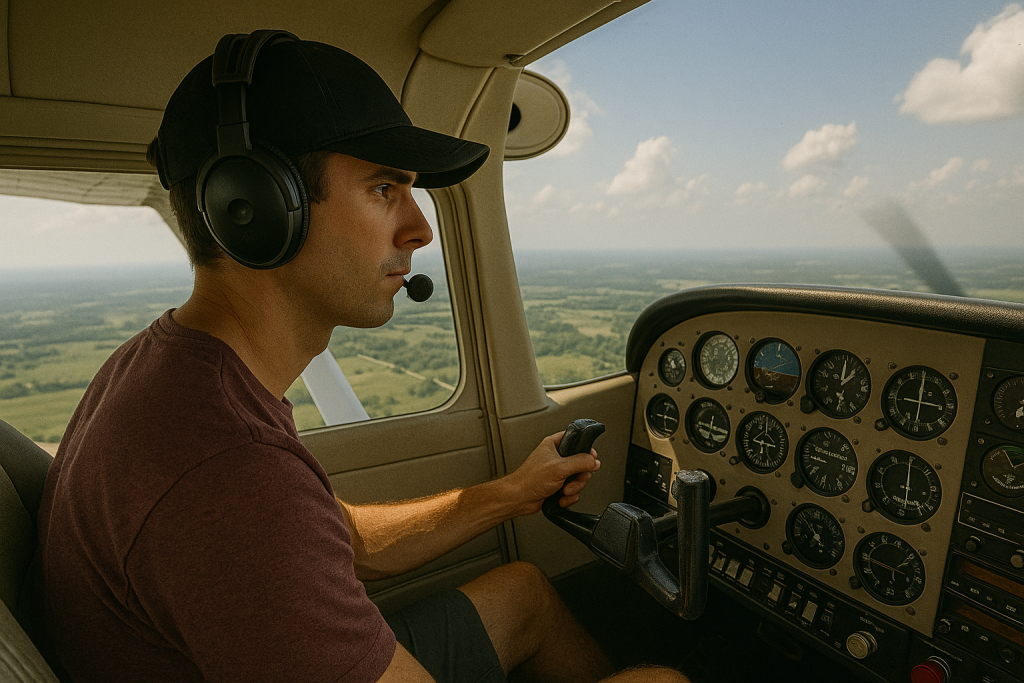
Once you’re at a safe altitude — usually 300–500 feet AGL depending on your school’s guidance — you make a climbing turn to crosswind. This is where you learn to manage both altitude and lateral positioning at the same time. You watch for departing and arriving traffic and keep your turn modest, typically 20 degrees of bank. The crosswind leg is short but reminds you to always anticipate wind drift. You’re building your first “corner” of the pattern, learning to carve out space in the sky deliberately rather than reactively.
12. Turning Downwind
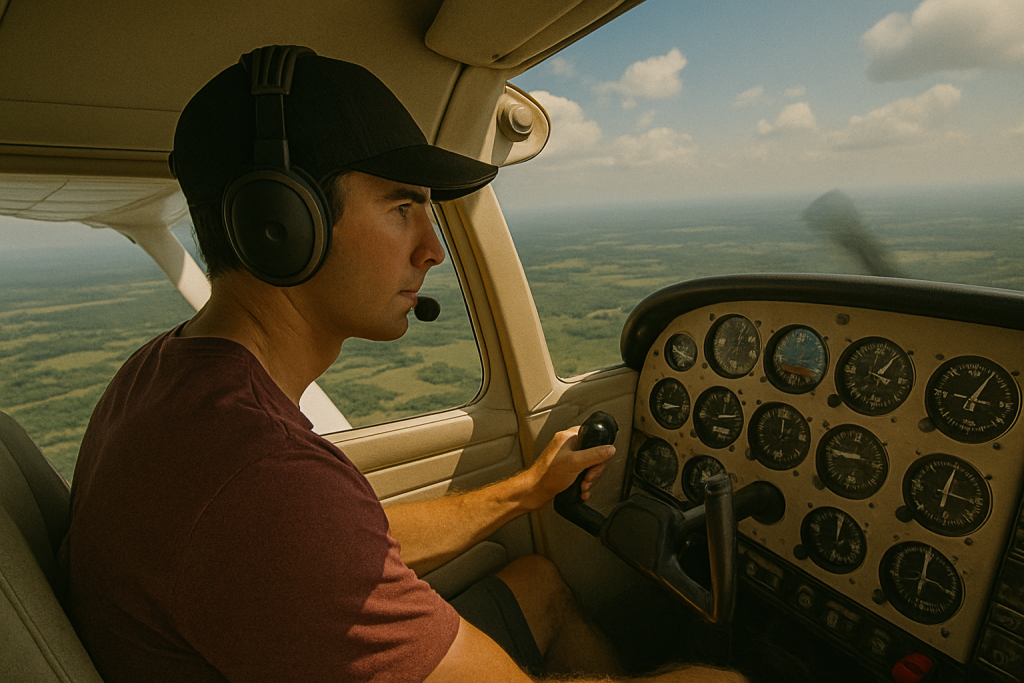
Level off at pattern altitude — usually 1,000 feet AGL — and reduce power to your cruise pattern setting. The downwind leg offers you something priceless: time to breathe. You can now settle into stabilized flight, verify spacing from the runway (typically about ½ to 1 mile), and run your before-landing checklist. The turn to downwind is also where you start thinking ahead. A good downwind leg is all about foresight — planning your abeam-the-numbers configuration, thinking about the winds, and getting ready to make smooth, coordinated turns. You’re no longer fighting to catch up. You’re ahead of the airplane.
13. Configuring the Airplane Abeam the Numbers
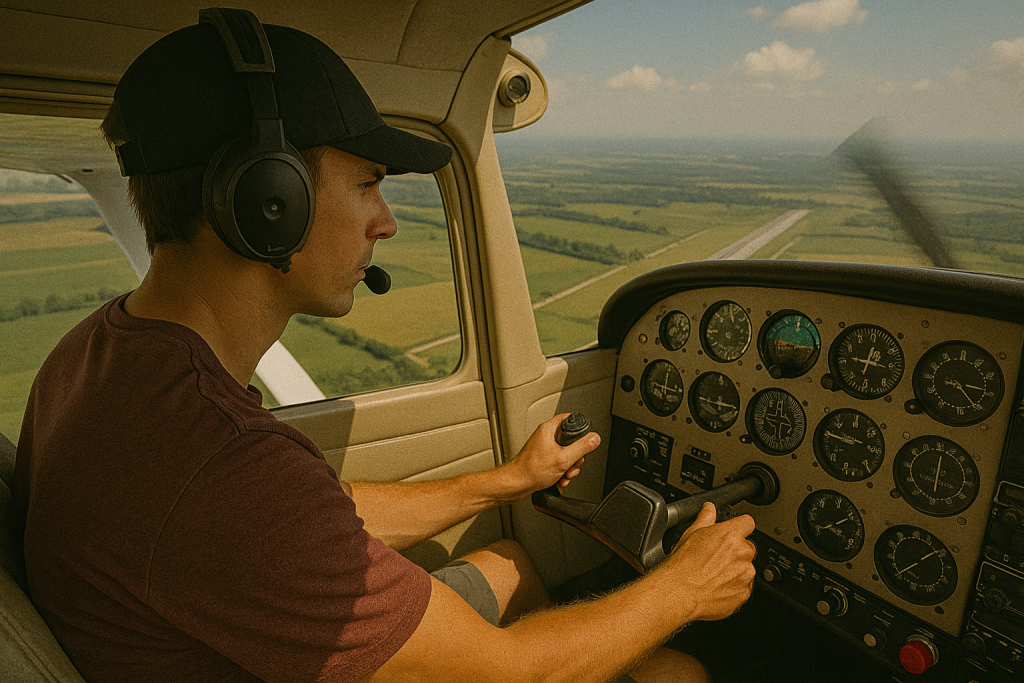
When your wing passes abeam the runway numbers, you begin the transition from “flying around the airport” to “flying to land.” You reduce power, add the first stage of flaps, and begin your descent at a controlled rate — often around 500 fpm. This step trains you to create a consistent, dependable approach profile. You cross-check airspeed, trim, and position relative to the runway. Over time, this moment becomes instinctive. Your airplane sinks gently, the runway markers drift behind you, and you feel like you’re guiding the airplane instead of managing it.
14. Turning From Downwind to Base
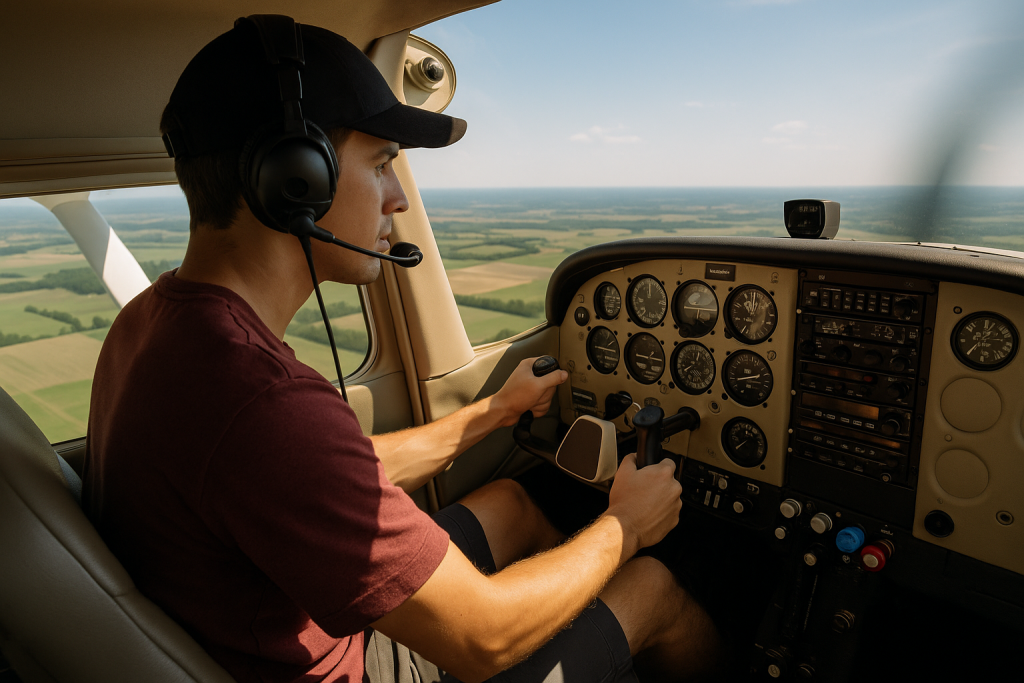
Your base turn is where judgment begins to matter. You choose the correct moment based on wind conditions and your own spacing — too wide and your final becomes long; too tight and you overshoot. As you descend, you add more flaps as required and establish a stable descent rate. The base leg teaches you to shape your approach. It’s your sculptor’s moment — adjusting direction, altitude, energy, and timing to create a smooth path toward final. A good base turn reflects a calm, thinking pilot.
15. Turning Base to Final
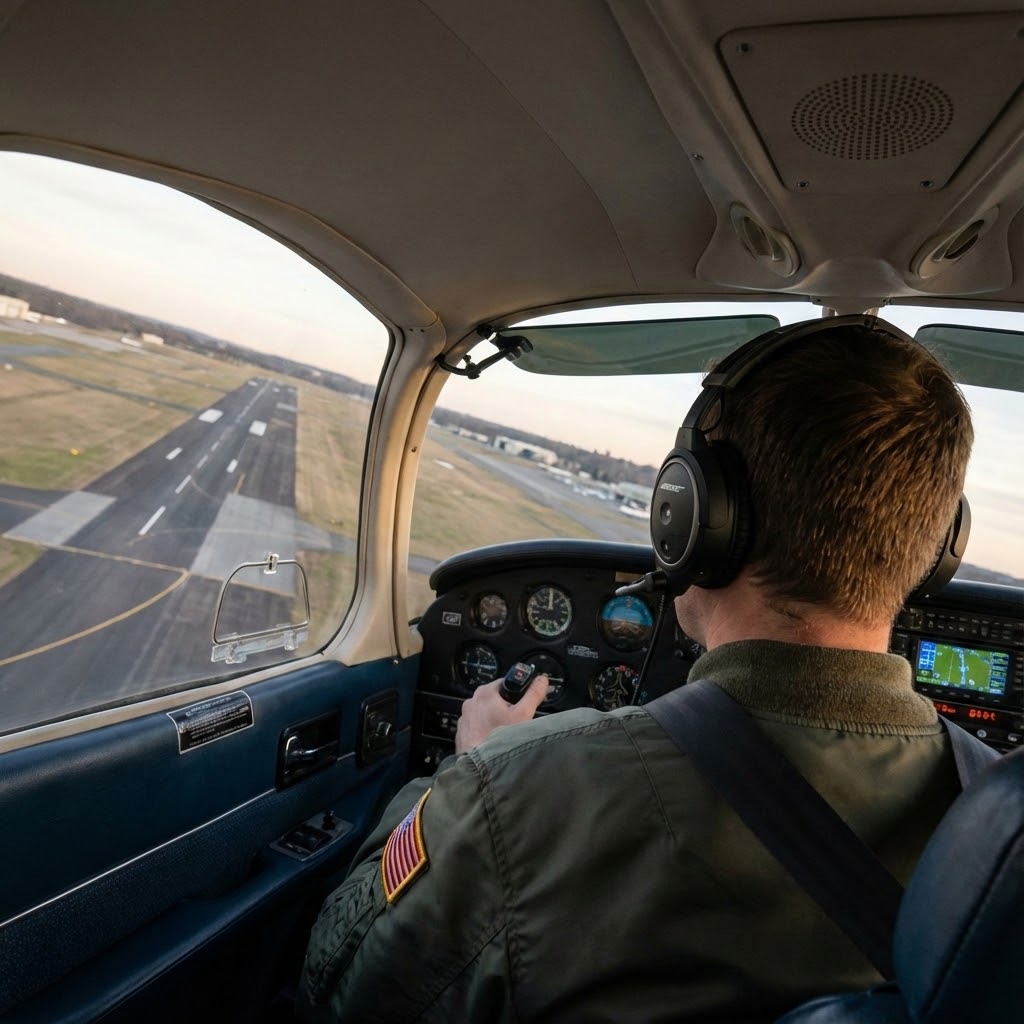
Pilots remember their first base-to-final turn the same way they remember their first solo: it’s the moment everything feels suddenly real. This turn demands coordination and attention. You must avoid overshooting or undershooting final, monitor your airspeed carefully, and keep your descent stabilized. You’re lining up not just with the runway but with a precise glide path that leads you all the way home. When done correctly, the base-to-final turn feels less like a maneuver and more like a commitment — the moment you decide: I am landing.
16. Final Approach to Short Final
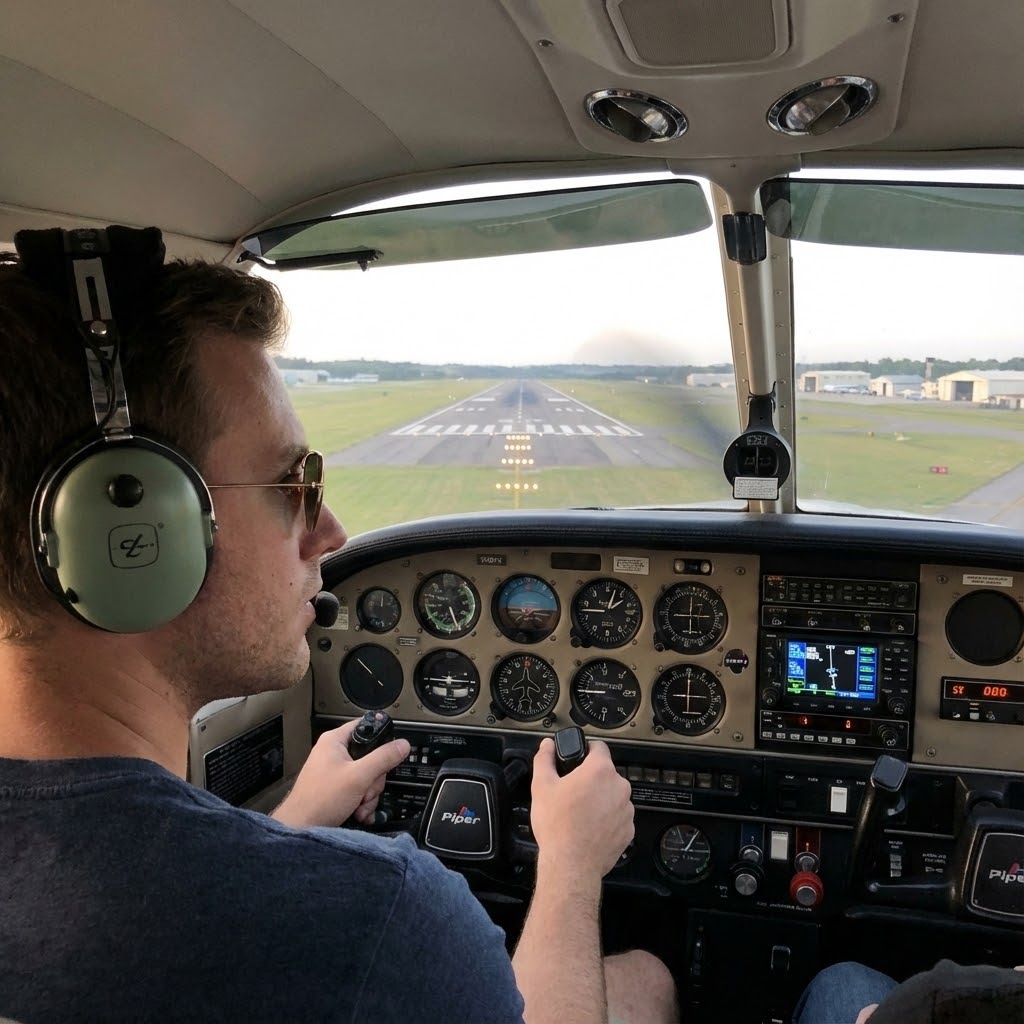
Final approach is your opportunity to demonstrate consistency. You manage pitch to control airspeed and power to control your descent. You aim for the runway’s touchdown zone and correct for crosswinds using rudder and aileron inputs. A stable final is the sign of a developing aviator — everything feels smooth, predictable, and under control. As you approach short final, you shift your visual focus from the runway numbers to the far end, allowing your eyes to judge height and closure rate. Short final is the threshold between sky and earth, where every sense sharpens.
17. The Flare
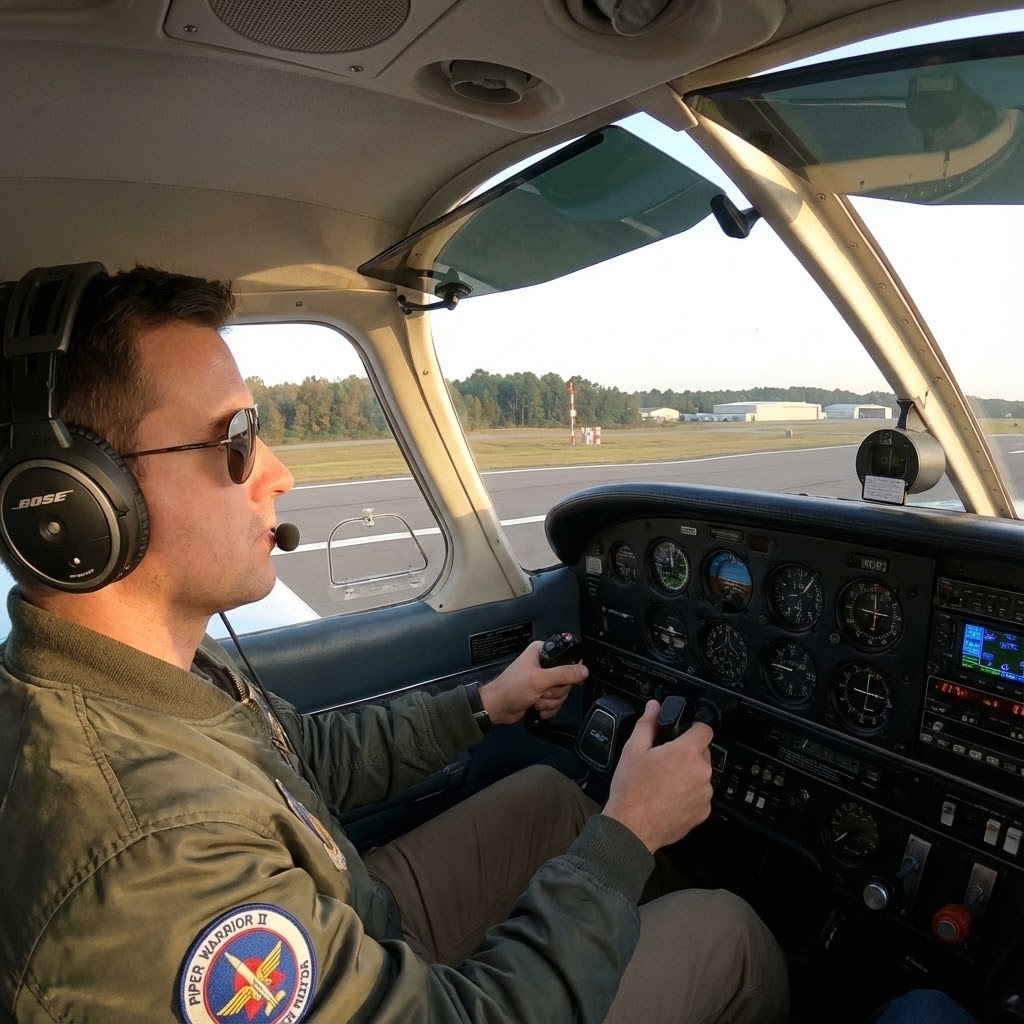
The flare is where students often feel frustration, then progress, then mastery. You transition from descent to level flight just above the runway, raising the nose gradually to arrest the descent. You’re balancing airspeed decay, attitude, and altitude in a dance that feels subtly different every time. A good flare is not about precision — it’s about awareness. You learn to sense height, to feel sink, to anticipate when the airplane wants to settle. It’s here, floating inches above the runway, that you truly begin to understand your airplane’s personality.
18. Touchdown and Slowing Down
Touchdown is the moment the airplane gently returns to the earth, ideally on the main wheels first. You maintain back pressure, keep the aircraft aligned with the runway using rudder, and lower the nosewheel only after the main gear is stable. As you slow, you reduce flaps, apply brakes smoothly, and transition from flying to rolling without losing situational awareness. Many students focus heavily on the landing itself, but slowing down safely is just as important. This is where discipline meets finesse. You’ve brought the aircraft back to the ground, but your job isn’t done yet.
19. Taxiing Clear of the Runway
Once you’re at a safe taxi speed, you exit the runway at the first appropriate taxiway and stop past the hold-short line. This is where you take a breath, clean up the airplane, and acknowledge the completion of one full traffic pattern. Many pilots underestimate this step, but it’s a critical safety habit — leaving the runway promptly, communicating your intentions clearly, and resetting the aircraft for ground operations. Taxiing clear reminds you that flying is continuous awareness. Even though the airplane is no longer airborne, you remain the pilot-in-command until the prop stops spinning.
20. Taxiing Back to the Ramp
The flight has ended, but your professionalism hasn’t. Taxiing back to the ramp is where you demonstrate care for your craft and courtesy toward others. You follow taxi instructions precisely, watch for other aircraft, manage your power at low RPM, and steer smoothly. This quiet moment often gives you time to reflect on the pattern you just flew — what worked well, what you want to refine, what you learned about the winds, about spacing, about your own developing skills. Every taxi back is time to grow.
21. Parking and Shutdown
Finally, you pull into your parking spot, align the airplane properly, and perform the shutdown checklist. You ensure the avionics are off, mixture is pulled to idle cutoff, the prop winds down, and the engine comes to a smooth stop. You secure the aircraft, tidy the cockpit, install the control lock, and close your flight with intention. Shutdown is more than a mechanical process — it’s a ritual of respect. You’re thanking the airplane for carrying you safely through another pattern, and you’re acknowledging your growth as a pilot.
When you step out onto the ramp and look back at the airplane, something subtle happens: you feel a little more like an aviator than you did twenty minutes ago.
Final Thoughts
The traffic pattern is the heartbeat of flight training. It’s where you transform checklists into habits, maneuvers into instincts, and nervous energy into confidence. Whether you’re preparing for your first solo or polishing your skills before your checkride, the pattern will always remain your oldest and most honest instructor.
Every lap, every flare, every turn is shaping you into the pilot you’re working hard to become.
And when you share this journey with others on PilotDiscovery — through your videos, your stories, your insights — you’re not just learning to fly. You’re helping the next wave of student pilots take their own first steps into the sky.
Aviation grows pilot by pilot, pattern by pattern.
And today, you just flew another one.