
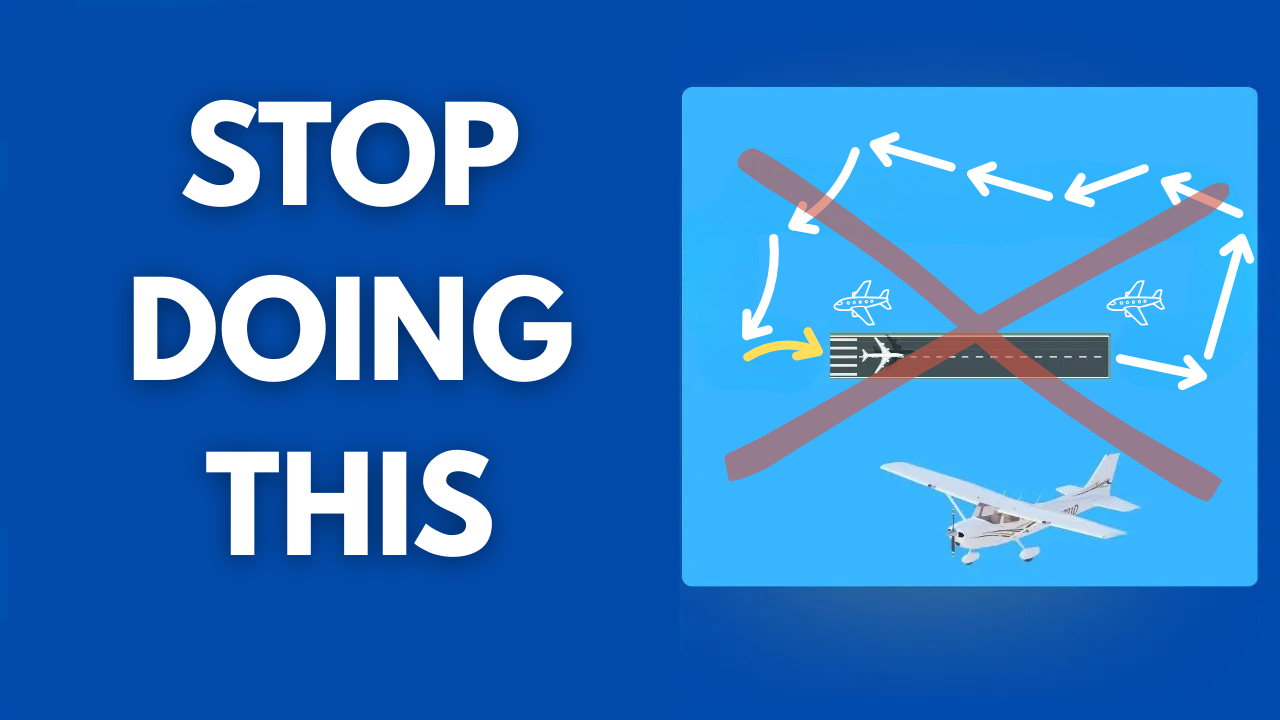
Flying the traffic pattern is one of the first skills student pilots learn—and one of the last they ever truly master. On the surface, it looks simple: take off, fly a rectangle, land. But in practice, the traffic pattern is where discipline, judgment, aircraft control, and situational awareness all collide in a relatively small piece of airspace.
Instructors know this well. So do examiners. Many checkride failures, runway incidents, and unstable approaches trace back not to a lack of knowledge, but to small, repeatable mistakes made in the pattern. These mistakes often appear harmless on quiet days, but they compound quickly when traffic density, wind, workload, or stress increases.
This article breaks down 20 common traffic pattern mistakes pilots make, why they matter, and how to fix them. Whether you’re a student pilot preparing for solo or checkride, or a certificated pilot looking to sharpen fundamentals, the goal is the same: fly predictable, disciplined, and safe patterns that work everywhere—from sleepy uncontrolled airports to busy Class D environments.
Throughout, we’ll reference guidance from the Federal Aviation Administration, including the Airplane Flying Handbook (FAA-H-8083-3), Pilot’s Handbook of Aeronautical Knowledge (FAA-H-8083-25), and applicable sections of 14 CFR Part 91.
1. Rotating at the Wrong Speed (Too Early or Too Late)
Rotation speed—Vr—is not a suggestion or a feeling; it’s a performance-based value derived from aircraft design and testing. Rotating too early forces the airplane to fly before the wings are ready, degrading climb performance and increasing stall risk. Rotating too late wastes runway and flattens the initial climb, reducing obstacle clearance margins.
The FAA emphasizes consistent, published takeoff speeds in the Airplane Flying Handbook, noting that proper rotation timing ensures predictable liftoff and climb characteristics. Discipline here sets the tone for the entire pattern. A smooth rotation at the correct speed allows the airplane to fly itself off when it’s aerodynamically ready, not when the pilot is impatient or hesitant.
2. Failing to Maintain Runway Centerline During Climb-Out
Losing the runway centerline on takeoff is not just a cosmetic error—it’s a predictability problem. Other pilots expect departing traffic to track straight ahead. Drifting left or right during climb-out can place your aircraft where others aren’t looking, particularly in busy patterns.
This mistake usually stems from poor rudder control. Takeoff is a rudder exercise, not an aileron one. Left-turning tendencies must be actively managed, especially at high power and low airspeed. The FAA stresses directional control during takeoff in FAA-H-8083-3, emphasizing continuous corrections rather than delayed reactions.
3. Turning Crosswind Before Reaching a Sufficient Altitude
Turning crosswind too early sacrifices altitude for geometry—and altitude is insurance. At low altitude, options are limited. An early turn reduces time to diagnose problems, manage engine failures, or maintain safe separation from traffic.
FAA guidance consistently emphasizes climbing to a safe altitude before initiating turns, particularly in the takeoff and departure phase. While local procedures may vary, the principle remains the same: climb first, then turn. A stable climb gives you time, airspeed, and situational awareness—three things you cannot afford to lose early.
4. Not Selecting an Engine-Out Landing Area Before Takeoff
Hoping nothing goes wrong is not a plan. Every takeoff should include a brief mental rehearsal of where the airplane will go if the engine fails at various points after liftoff. Without this pre-decision, hesitation replaces action when seconds matter.
The FAA repeatedly emphasizes “aviate, navigate, communicate” for emergencies. That sequence only works if navigation decisions are pre-loaded. Selecting a runway, field, or clear area ahead of time reduces cognitive load and improves response quality. This is especially critical in the traffic pattern, where altitude is limited and options narrow quickly.
5. Flying a Rounded or Inconsistent Traffic Pattern
A traffic pattern is designed to be flown with straight legs and deliberate turns, not a continuous circle. Rounded patterns obscure key decision points: when to level off, when to configure, and when to descend.
FAA pattern diagrams exist for a reason—they create repeatability. A square pattern helps pilots judge spacing, maintain altitude discipline, and plan descent profiles consistently. When the pattern becomes fluid or improvised, everything else becomes reactive. Precision in geometry leads to precision in execution.
6. Failing to Level the Wings on the Crosswind Leg
Skipping the crosswind leg by rolling directly from upwind into downwind may seem efficient, but it removes a critical stabilization phase. Leveling the wings allows the aircraft to finish climbing, re-trim, and gives the pilot time to visually clear for traffic.
The FAA emphasizes clearing turns and stabilization between maneuvers. A brief, level crosswind leg enhances situational awareness and spacing, particularly at airports with mixed aircraft types and performance capabilities.
7. Improper Downwind Spacing (Too Close or Too Far)
Downwind spacing errors set up unstable approaches before base is ever turned. Flying too close to the runway compresses the pattern and forces steep, rushed turns. Flying too far away tempts pilots to dive, drag the airplane in, or stretch the glide.
The goal is balance. Proper spacing allows for a normal descent profile, a stabilized approach, and margin for wind correction. The FAA stresses stabilized approaches as a cornerstone of safe landings, and spacing is the foundation of that stability.
8. Ignoring Crosswind Correction on Downwind
Wind affects ground track, not just heading. Many pilots fly a downwind heading that looks right while slowly drifting closer to or farther from the runway. This destroys spacing and destabilizes the pattern.
FAA guidance emphasizes flying a ground track parallel to the runway, using crab angles as necessary. Ignoring wind correction upstream guarantees larger corrections later—often when workload is highest.
9. Making Incomplete or Improper Radio Calls
Radio calls aren’t about etiquette; they’re about predictability. Incomplete, late, or missing calls reduce other pilots’ ability to build an accurate mental picture of traffic flow.
While Part 91 does not mandate radio calls at uncontrolled airports, the FAA strongly encourages standardized communications. Clear position reports—who you are, where you are, and what you intend to do—reduce ambiguity and enhance safety, especially in mixed-experience environments.
10. Poor Speed and Altitude Control in the Pattern
Inconsistent airspeed and altitude management creates a domino effect. When these basics slip, configuration timing, descent planning, and approach stability all suffer.
The FAA repeatedly emphasizes maintaining published pattern altitudes and target airspeeds. Trim early. Stabilize often. The pattern should feel calm, not rushed. If constant corrections are required, something upstream has already gone wrong.
11. Mistiming the Abeam-the-Numbers Setup
Abeam the numbers is not a casual reference point—it’s a trigger. Power reduction, configuration changes, and descent planning typically begin here. Delaying this setup rushes the base and final turns. Starting too early leads to dragging the airplane around the pattern.
FAA training materials emphasize consistent procedures to reduce workload. When the abeam setup is predictable, everything downstream becomes easier and more repeatable.
12. Confusing Pitch and Power on Approach
One of the most persistent pattern errors is reversing pitch and power roles. Pitch controls airspeed; power controls rate of descent. Mixing these leads to unstable approaches and excessive corrections.
This is especially dangerous on the back side of the power curve, where adding pitch without power worsens sink rate. FAA-H-8083-3 clearly explains this aerodynamic relationship and stresses correct control usage during approach and landing.
13. Skipping the Pre-Landing Checklist
Checklists exist to catch what memory misses—especially under workload. Skipping the pre-landing checklist invites configuration errors at the worst possible time.
The FAA strongly promotes checklist usage in all phases of flight. Discipline on routine flights prevents errors on abnormal ones. Complacency is not a skill; consistency is.
14. Losing Visual Alignment With the Runway Numbers
The runway numbers provide instant visual feedback. If they drift up, down, or sideways in the windshield, the approach is already destabilizing.
The FAA emphasizes visual references during landing to maintain glidepath and alignment. Ignoring these cues forces pilots into reactive corrections late in the approach, increasing risk.
15. Failing to Establish a Stable Approach
A stable approach is defined by consistent airspeed, power, configuration, and descent rate. Large corrections late in the approach are warning signs, not normal technique.
FAA guidance strongly supports go-arounds when stability criteria are not met. Stability is not about perfection—it’s about predictability.
16. Not Applying Proper Crosswind Correction on Final
Crosswinds do not disappear on final. Failing to correct drift early leads to rushed alignment corrections near the runway.
The FAA recognizes both crab and wing-low techniques, but the objective is the same: maintain centerline alignment and prevent lateral drift. Early correction simplifies the landing.
17. Improper Crosswind Technique During Touchdown
Landing with drift still present increases side loading on landing gear and reduces directional control. Proper crosswind technique requires transitioning from crab to wing-low before touchdown, as appropriate.
FAA materials emphasize maintaining longitudinal alignment with the runway during touchdown. Technique matters most when conditions are challenging.
18. Flaring Too Early or Too Late
Timing the flare is a judgment skill refined through practice. Early flares bleed airspeed and result in hard landings. Late flares drive excess energy into the runway.
The FAA teaches a smooth transition from descent to level flight, using peripheral vision and runway perspective cues. The flare is a continuation, not a sudden event.
19. Riding the Brakes After Landing
Braking should be deliberate, not reflexive. Riding the brakes generates unnecessary heat, increases wear, and can reduce directional control.
The FAA advises aerodynamic braking and appropriate deceleration techniques based on runway length and conditions. Good landing discipline extends beyond touchdown.
20. Forgetting to Retract Flaps After Landing
Failing to retract flaps increases lift, reduces wheel braking effectiveness, and can compromise control—especially in gusty conditions.
The FAA includes flap retraction as part of after-landing procedures for a reason. Configuration awareness doesn’t end when the wheels touch down.
Conclusion: Discipline Beats Experience
Traffic pattern mistakes rarely stem from ignorance. They stem from complacency, rushed decision-making, and degraded discipline. The pattern is where habits are exposed—and where they can be corrected.
By recognizing these 20 common mistakes and applying FAA-aligned fundamentals, pilots can fly patterns that are calm, predictable, and professional. Precision in the pattern isn’t about perfection; it’s about building margins where they matter most.
Whether you’re preparing for your first solo or your thousandth landing, the traffic pattern remains a proving ground. Fly it with intent.